



By: Sophie Allen Jun 10/2026

If you’re someone who pays close attention to your Google Analytics, particularly how your pages are performing, then you may have noticed that pages that once received loads of sessions every month have been increasingly losing sessions year-over-year. Your impressions may remain high, but your clicks are dwindling. While this may not be true for everyone, many have noticed a seemingly inexplicable loss of sessions that tend to align with the introduction of AI Overviews. While I’d love to blame this wholly on AI as we predicted earlier in the year, this has actually been a slow build from a variety of SERP features over the years that seems to have only now reached its pinnacle. This trend is called zero-click searches, and, according to global management consulting firm Bain, about 80% of consumers rely on them (particularly AI summaries) for at least 40% of their searches.
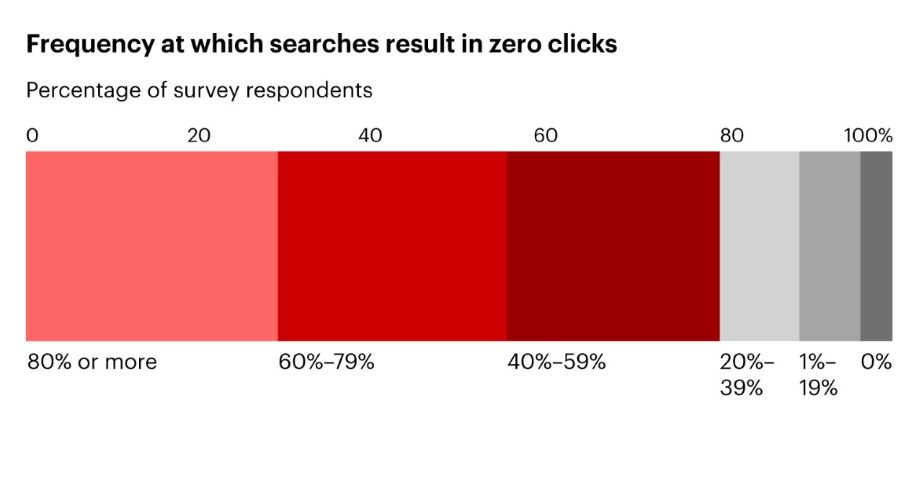
While in the past, we may have (and still do) audited pages that are suddenly losing sessions and reoptimized them with updated content, fresh metadata, and even a potential keyword overhaul if necessary, and that would tend to solve the problem. However, all the optimizations in the world can’t help you if users aren’t clicking on your site to begin with. That is the issue of a zero-click search; it is literally a search that doesn’t result in a click, as users are getting their information directly from SERP features such as:
Zero-click searches are popular because they offer fast, convenient answers. Users can type their question into Google and have it answered without having to click through to another site or even scroll far.
At the same time that users can have their queries answered without clicking through to a website, the popularity of using applications like Perplexity and ChatGPT to answer questions is growing and has been since the end of 2024.
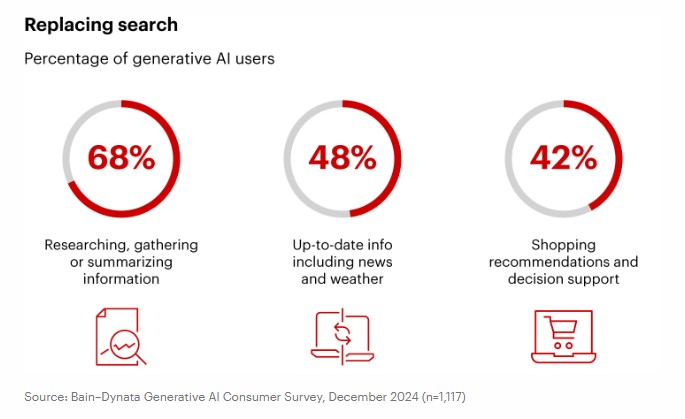
Bain reports that “roughly 40% to 70% of LLM users use the platforms to conduct research and summarize information (68%), understand the latest news and weather (48%), and ask for shopping recommendations (42%).”
Despite zero-click searches typically being informational queries over ones with high purchase intent, they do result in a loss of share of voice for high-value, non-branded searches, which is where the initial discovery phase typically is, as people seek answers and opinions before committing to a brand.
While zero-click searches can certainly be annoying if you’re measuring your SEO success by clicks and click-through rates, these types of searches aren’t all bad. If your website is showing up in places like featured snippets, AI Overviews, or local packs, you’re going to reap the benefits of:
In addition to the above benefits, changing how you measure and determine the success of your SEO to include optimizations for zero-click searches can give you a leg up on the competition, who may still be focusing on the traditional metrics.

As the saying goes, if you can’t beam ‘em, join ‘em. In order for SEO to succeed and combat zero-click searches, we must optimize for them. Here are some things that you can do to get started:
Keeping these tips in mind as you optimize your website should help your website appear at the top of these zero-click searches, enabling you to reap the benefits they can offer. Think of it like playing the SEO long game to attract more high-quality traffic to your site.
As zero-click searches and GEO rise, marketers need to adapt their strategies to remain competitive. For years, we’ve been optimizing based on EEAT principles, which, with a few formatting tweaks, can now be rewarded with featured snippets, knowledge panels, and AI overviews. While this does result in a zero-click search that admittedly can feel like a bad thing, it does promote brand recognition and awareness so that, when your audience is ready for the service or product you have to offer, your website is at the top of their mind.
As any marketer can tell you, SEO is constantly changing. There’s always something new to learn, and keeping up with the latest Google algorithm updates can feel like an endurance race. We adapt, we learn, we grow. So, it shouldn’t come as a surprise that we need to shift our focus when looking at website metrics. Sure, clicks are lovely, but getting that click doesn’t mean that visitors are staying on your site, are quality leads, or are taking any action. Even the best optimized website can’t convince someone to buy if they’re not ready.
Treat zero-click searches like free advertising; your digital doorknocker, raising awareness for your brand and showing potential traffic that you have the solution they’re looking for. That way, when you do get that click, it’s more likely to lead to a conversion.
Your business is unique; your marketing should be, too. Discover search marketing solutions that are tailored to your needs and turn casual website viewers into loyal customers. Get started by clicking the button on the right.
